The tourbillon is the most romanticised complication in watchmaking. But does it actually improve accuracy — or is it simply the ultimate expression of horological art?
In 1801, Abraham-Louis Breguet patented the tourbillon — a rotating cage designed to counteract the effects of gravity on a pocket watch's balance wheel. Two centuries later, the tourbillon remains the most celebrated and most debated complication in horology.
The Problem It Solved
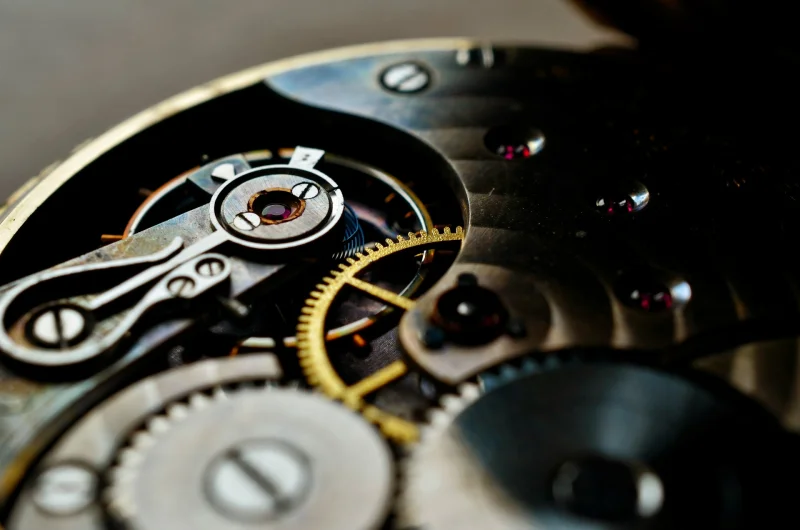
In the age of pocket watches, gravity was a significant enemy of accuracy. A watch resting vertically in a waistcoat pocket would experience constant gravitational pull in one direction, causing the balance wheel to oscillate unevenly. Breguet's solution: put the escapement in a cage that rotates once per minute, averaging out the gravitational error.
On the Wrist, Does It Matter?
The honest answer is: not for accuracy. A wristwatch is in constant motion, naturally averaging gravitational effects across positions. Modern lever escapements and silicon balance springs can achieve extraordinary precision without a tourbillon. Some COSC-certified chronometers outperform tourbillon movements in daily use.
But Accuracy Is Not the Point
A tourbillon is a declaration. It says: our craftsmen can build a mechanism of extraordinary complexity and beauty, and we choose to make it visible. The finest tourbillons — Patek Philippe, A. Lange & Söhne, Greubel Forsey — are objects of pure horological art, finished to standards that reward the closest examination.
What to Pay
Entry-level tourbillons begin around $15,000 for Chinese-made movements. Swiss manufacture tourbillons from established maisons start at $80,000 and rise steeply. At the summit, a Greubel Forsey or Patek Philippe Sky Moon Tourbillon represents some of the most expensive and accomplished watchmaking on earth.
Our view: buy a tourbillon because it moves you, not because it will make your watch more accurate. That is the honest collector's approach.